Why Lock Type Matters
When evaluating security upgrades, understanding the different types of door locks available is critical. We frequently see property owners invest heavily in thick doors, only to leave the actual locking mechanism vulnerable.
From what recent 2025 Royal Malaysia Police reports indicate, forced entry through standard hardware remains a primary method for local break-ins. The right choice depends entirely on your door material, daily usage, and budget.
Our lock replacement service fits all four common categories to close these specific gaps. Let’s examine the facts so you can make a data-driven decision for your property.

Deadbolts
A deadbolt is a solid metal bolt that extends directly into the door frame when you turn a key or thumbturn. It lacks a spring, meaning the mechanism stays firmly in place until manually retracted.
We highly recommend these for establishing strong resistance against forced physical entry. Local hardware options from brands like St Guchi often feature ANSI Grade 1 or 2 certifications for heavy residential use.
| Feature | Single-Cylinder Deadbolt | Double-Cylinder Deadbolt |
|---|---|---|
| Operation | Key outside, thumbturn inside | Key required on both sides |
| Security Advantage | Fast, convenient daily locking | Stops reach-through glass break-ins |
| Safety Warning | Ideal for quick fire escapes | Slower emergency exit |
| Common Placement | Landed home front doors | Secondary condo grille locks |
Our installers frequently pair these with standard knobs to create a layered defense. You will commonly see deadbolts functioning as secondary locks on condo main doors.
Mortise Locks
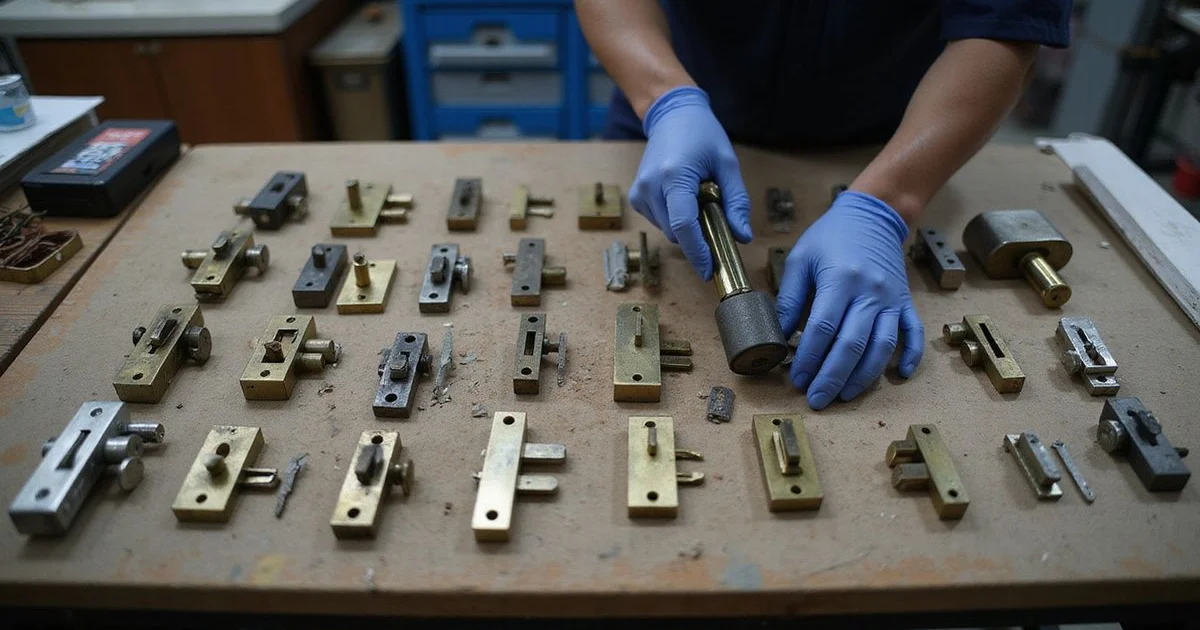
A mortise lock is a heavy-duty security system housed inside a deep pocket cut directly into the edge of the door. The internal lock case pairs with a metal faceplate to cover the visible edge.
We fit these daily on Malaysian security doors and older solid timber doors because they offer superior structural strength. A standard mortise unit usually combines a spring latch for everyday closing with a heavy deadbolt for night-time security.
Advantages of a Mortise System
- Heavy-Duty Materials: Premium models feature SUS304 stainless steel components that resist drilling and prying.
- Dual Functionality: They combine the everyday convenience of a latch with the hardened security of a deadbolt.
- Multipoint Upgrades: Many modern security doors connect the mortise to a 14-point locking system for maximum hold.
- Longevity: The internal pocket protects the mechanical parts from external dust and moisture.
When comparing a deadbolt vs mortise setup, the mortise system offers superior structural stability. Our hardware teams notice that these locks are significantly harder for intruders to force open.
Upgrading a mortise cylinder is also quite straightforward if you want to add smart features later.
Cylindrical (Tubular) Locks
Cylindrical locks fit into a standard tubular bore drilled straight through the door face. These represent the simple knob and lever handles you see on most interior doors inside condos.
We appreciate how quick and inexpensive they are to install compared to a full mortise pocket. The main locking mechanism sits inside the knob itself, making it highly vulnerable to heavy physical impacts.
Common Security Mistake: Never use a standalone cylindrical lock on an exterior door. A determined burglar can easily defeat a basic tubular lock with a heavy wrench or hammer in under thirty seconds.
Many property developers use these tubular locks for interior rooms while keeping a heavier lock on the front entrance. We always suggest upgrading the standard builder-grade knobs to heavy-duty lever handles from brands like Yale for better accessibility.
Lever handles are much easier to open with full hands than round knobs.
Euro Profile Cylinders
The euro cylinder lock is a specific, standardized shape that holds the actual keyway and internal security pins. It operates the locking mechanism inside heavy mortise locks and modern metal security doors.
We love this design because you can easily swap out the cylinder independently without replacing the entire door handle. This modularity allows you to dramatically improve your home defense on a tight budget.
Burglars frequently use a technique called lock snapping to break a standard, cheap cylinder in half within seconds. We constantly replace snapped locks after break-ins that could have been easily prevented.
Upgrading to a high-security version completely neutralizes this specific threat. For deeper detail on cylinders that resist these attacks, see our high-security lock options.
Key Euro Cylinder Upgrades
- Anti-Snap Protection: Features a reinforced central bar or a sacrificial front section that breaks off, leaving the core intact.
- Anti-Pick Security: Utilizes specialized mushroom or spool pins that catch lock-picking tools and prevent the barrel from turning.
- Anti-Drill Plates: Inserts hardened steel pins right in front of the keyway to destroy standard drill bits.
- Anti-Bump Design: Prevents the use of bump keys from forcing the internal pins to jump into the open position.
Security Grades
Security grades verify that a lock has passed rigorous, independent laboratory testing against known physical attacks. A budget cylinder offers zero verified protections, while a premium model carries specific defense ratings.
We strongly advise property owners to check for local SIRIM QAS International certifications on any new ironmongery. International systems like BS EN 1303 in Europe or ANSI/BHMA in the US also provide excellent benchmarks for durability.
| Certification Mark | Region / Body | What It Guarantees |
|---|---|---|
| SIRIM MS 1073 | Malaysia | Verified fire resistance and local structural compliance |
| TS007 3-Star | UK / Europe | Maximum protection against lock snapping and bumping |
| ANSI Grade 1 | United States | The highest level of commercial physical force resistance |
Our supply partners always prioritize certified hardware for main entryways. A lock without a tested grade is simply an unproven promise.
Which Lock Suits Your Door
Selecting the correct hardware requires matching the lock’s strength to the specific function of the entryway. An interior bedroom needs mere privacy, while a front gate demands maximum physical resistance.
We use a simple formula based on the location and material of the specific entry point. Review this straightforward checklist before purchasing your next set of door hardware.
- Landed home front door: A heavy mortise lock paired with a TS007 3-star anti-snap euro cylinder.
- Condo unit front door: Keep the existing mortise casing, but immediately upgrade the euro cylinder to an anti-pick model.
- Bedroom door: A standard cylindrical knob or a lever lock works perfectly.
- Grille gate: A heavy-duty padlock or a dedicated cylinder lock with a hardened boron steel shackle.
- Security door: A multipoint mortise system utilizing SUS304 steel components.
When in doubt about the different types of door locks, ask which lock fits.
Our technicians will review a photo of your door and recommend a suitable type.
You will receive a specific security grade recommendation for your exact setup.