Warning Signs You Need a New Door Lock
You know how a mechanical failure rarely happens completely out of nowhere? The signs you need a new door lock are almost always there before the mechanism completely freezes.
Catching these early symptoms keeps a minor repair from turning into a major late-night headache. Our lock replacement service handles everything from planned upgrades to sudden emergencies.
Here is a look at the actual data behind hardware failure and a few practical ways to respond.
Symptoms to Take Seriously
Mechanical wear and tear or harsh environmental conditions cause the vast majority of lock failures. Identifying these specific symptoms early can save you from an expensive lockout.
Key Won’t Turn or Sticks Frequently
Worn pins inside the cylinder or a misaligned door putting pressure on the bolt usually cause this frustrating issue. It will inevitably get worse over time if ignored.
We frequently see homeowners make the mistake of spraying WD-40 into the keyhole to fix this. Standard liquid lubricants actually attract dust and grime. A true insider tip is to use a dry graphite powder lubricant instead.
Loose Handle or Knob That Wobbles
A loose handle usually means the internal backset screws have backed out of their threading. It can also mean the internal spindle is damaged.
Our technicians find that ignoring a wobbly handle often leads to the latch detaching completely. This specific internal wear makes the door highly vulnerable to forced entry. Tightening the visible screws is a good first step, but a spinning spindle requires professional attention.
Latch Won’t Catch First Try
This failure is often a strike-plate alignment issue caused by the door hinges sagging over the years. In doors approaching that standard 7 to 10-year average lifespan, it frequently points to a failing latch spring.
We always check the frame alignment first before recommending new hardware. You should test this by opening the door and trying to throw the deadbolt or latch. If it works smoothly while open but catches when closed, your frame alignment is the culprit.
Visible Rust or Pitting
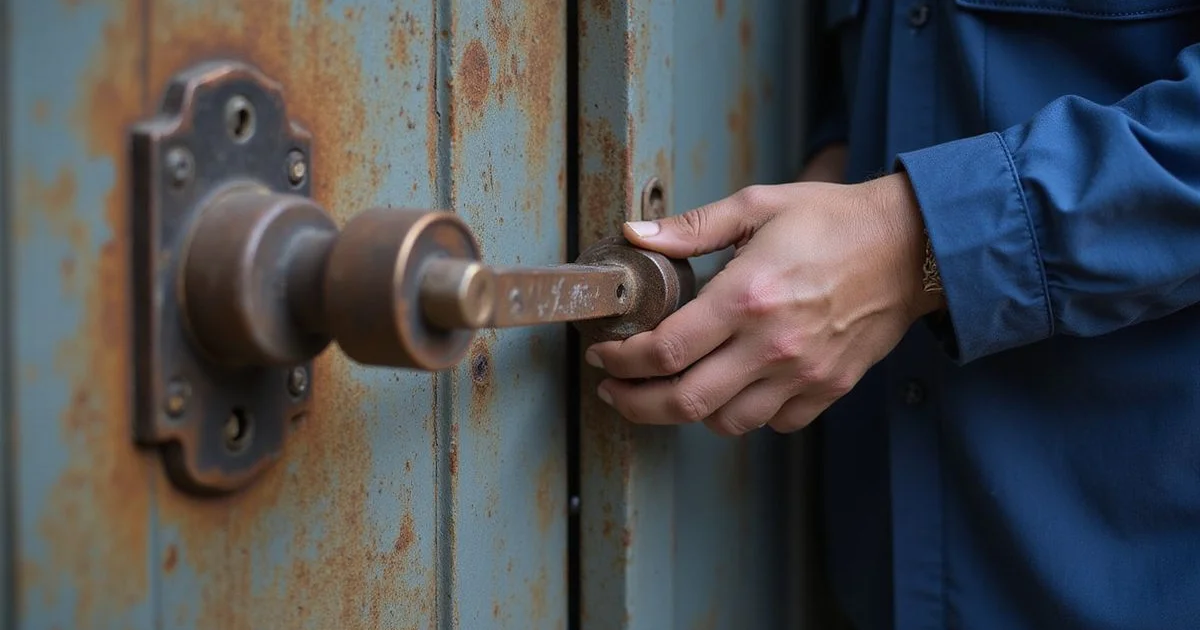
The constant 80 percent plus average humidity here in Malaysia quickly eats away at cheaper zinc alloy locks. Rust gets inside the cylinder and completely seizes the small metal pins.
Our team strongly recommends replacing pitted hardware with solid brass or 304-grade stainless steel options. These premium materials withstand tropical moisture significantly better than standard base metals. Outdoor gates and grille locks are particularly vulnerable and need frequent inspection.
Key Has Visibly Worn Smooth
When the sharp cuts on your key blade have rounded off, the cylinder pins also wear down from gripping that smooth surface. Both the key and the internal mechanism need immediate attention.
We suggest comparing your daily key against a spare that rarely gets used. A noticeable difference in the ridge sharpness is a clear indicator that the lock internals are also degrading.
Key Broke Off Inside the Lock
A key snapping off inside the cylinder usually signals a serious underlying problem like rusted or tight pins. This goes far beyond the immediate frustration of needing an extraction.
Our standard extraction service often reveals that the actual cylinder is too damaged to salvage. A failing door lock in this condition typically requires a completely new cylinder to restore reliable security.
Lock Makes Grinding or Scraping Sounds
Healthy locking mechanisms turn quietly and smoothly. Grinding noises indicate severe metal-on-metal damage happening inside the housing.
We have found that ignoring this sound usually results in the bolt getting permanently jammed in the locked position. Replacing the hardware at the first sign of grinding is much cheaper than drilling out a jammed deadbolt later.
Security-Triggered Replacement
Sometimes the hardware functions perfectly, but a security breach means you need to replace it anyway. Protecting your property from unauthorized access should always be the top priority.
According to a recent 2024 report by the Department of Statistics Malaysia, property crimes surged by over 12 percent, with more than 47,000 cases recorded. A staggering 77.6 percent of house break-ins happen during the night.
We always advise clients to evaluate their access control after any major life event. Consider swapping your locks under these specific circumstances:
- Moved into a new place, as previous occupants may have copies.
- Lost a key, because anyone who finds it knows the address via a fob or context.
- Break-in or attempted break-in, since the lock might be compromised even if it survived.
- Ex-tenant or ex-relationship, involving anyone who had legitimate key access in the past.
- Lost a master key at a shared property, meaning the whole keying system needs to change.
For deciding the most cost-effective response to these situations, see our guide on rekey or replace?.
When Rekey Is Enough
If the lock hardware is sound and you just want different keys, rekeying changes the internal pins so old keys no longer work. New keys are then cut to match the new pin configuration.
This process takes about 15 to 30 minutes and is incredibly cost-effective. Our pricing data shows that a standard rekey service typically runs between RM50 and RM120 per door.
This is significantly cheaper than buying a whole new unit. Standard hardware from brands like St Guchi or Yale is usually very easy to rekey.
When You Need Full Replacement
You must opt for a full replacement when the physical lock body is visibly damaged or outdated. Knowing exactly when to replace door lock hardware ensures your home remains a hard target.
A compromised deadbolt ruins your entire security perimeter. Our technicians install completely new systems when safety cannot be guaranteed by a simple rekey.
Replace the lock when:
- The lock body or cylinder is visibly damaged (cracks, snap marks).
- The lock is old enough that parts aren’t available for rekeying.
- You want a different lock type (upgrading from a basic cylinder to an anti-snap model).
- The lock has been forced or drilled in a break-in attempt.
- The lock fails functional tests even after rekeying.
The table below breaks down the key differences to help you make a clear choice.
| Feature | Lock Rekeying | Full Lock Replacement |
|---|---|---|
| Average Cost (MY) | RM50 to RM120 | RM150 to RM400+ |
| Time Required | 15 to 30 minutes | 45 to 90 minutes |
| Hardware Changed | Internal pins only | Entire locking mechanism |
| Best Used For | Lost keys, new tenants | Broken locks, security upgrades |
Reviewing these factors makes the decision much simpler.
When to Call Us
If you are noticing the signs you need a new door lock, act quickly to secure your property. Waiting until you are locked out to deal with a failing door lock will only cost you more in emergency fees.
We will inspect the hardware, tell you honestly whether it needs replacement or just service, and quote both options if either could work. Go ahead and book a lock check today to get started.