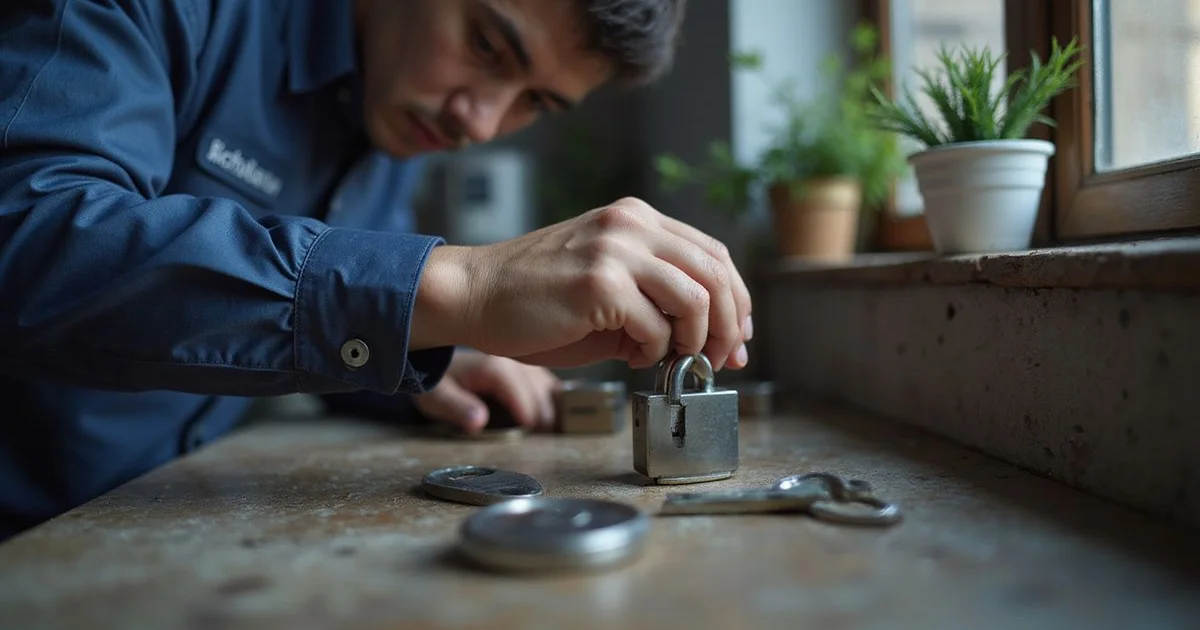
We often see homeowners struggle with a basic security dilemma. The choice usually boils down to deciding between a rekey vs replace locks service when keys go missing.
You might assume buying a brand-new lockset is the only safe option. We read through our service logs and noticed most clients spend far too much on full hardware swaps.
Understanding the mechanics behind a standard lock replacement and rekeying job can save you hundreds of ringgit.
Let’s look at the financial data, examine the condition of your existing hardware, and determine the safest path forward.
The Core Difference
We define rekeying as a surgical adjustment to your existing hardware. The locksmith extracts the internal cylinder and replaces the tiny pins inside so old keys no longer work. You keep the heavy outer housing of your trusty Yale or St Guchi lock. We find this method highly efficient because the cost covers mostly skilled labour rather than expensive brass components.
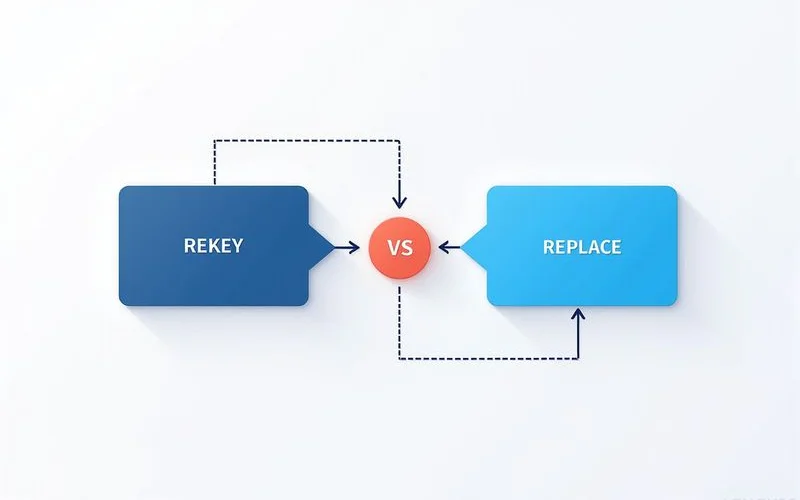
A full replacement involves stripping the entire mechanism off the door and fitting a new unit from scratch. This route charges you for both the labour and the factory-fresh hardware. Both choices achieve the exact same security outcome for a new property owner. The decision hinges entirely on your budget, the wear on the current metal, and whether you want a modern security upgrade.
Cost Comparison in Malaysia
We track pricing data across Malaysia to give you a realistic picture of local locksmith expenses for 2026. The price gap between adjusting pins and buying new hardware is substantial. You should look at the numbers side-by-side to make an informed choice.
Standard Pricing Breakdown
| Service Type | Scope of Work | Estimated Cost (MYR) |
|---|---|---|
| Rekey (per cylinder) | Change internal pins, keep existing lock body | RM80 - RM180 |
| Cylinder-Only Replacement | Swap the inner cylinder, keep the outer housing | RM150 - RM400 |
| Full Mechanical Replacement | Remove old lock, install new standard lockset | RM150 - RM600+ |
| Smart Lock Upgrade | Install digital lock (e.g., Xiaomi, Samsung) | RM499 - RM2,500+ |
We always recommend the rekeying route when the existing handle and deadbolt feel solid. Spending RM150 on a brand-new cheap lock makes little sense if you already own a premium RM400 St Guchi set. You are much better off paying RM80 to simply change the pins. We caution against rekeying a severely rusted unit, as this just preserves the damage.
When to Rekey
We see specific scenarios where swapping the pins is the smartest financial move. Handover days for new properties are a prime example. You have no idea how many contractors or agents held copies of the developer keys. We handle these situations daily.
Changing the internal configuration neutralises any floating keys instantly.
Ideal Scenarios for Pin Adjustment
- Moving into a new home: The previous owner maintained the original locks beautifully.
- Losing a house key: The latch and deadbolt still operate smoothly.
- Blocking past residents: A quick pin change locks out ex-tenants or former partners without alerting the neighbourhood.
- Creating a master key system: Setting all exterior doors to accept a single key is straightforward when the brands match.
We often remind clients that rekeying is entirely dependent on hardware compatibility. A locksmith needs matching pins and a healthy cylinder to perform the service correctly.
When to Replace
We know that mechanical hardware eventually reaches the end of its useful life. The average lifespan of a standard door lock is roughly 7 to 10 years. Malaysia’s high humidity and heavy tropical rains accelerate corrosion on external metal components. You need a full replacement when the internal springs snap or the metal housing begins to crumble.
We urge you to pay attention to how the handle feels during daily use. A sticky latch or a wobbly knob are clear warnings of structural failure. Reviewing the common signs you need a new lock will help you spot these issues early. We also suggest full replacements for victims of attempted break-ins. Damaged tumblers from a snapping attempt compromise the entire unit.
Top Reasons for a Hardware Swap
- Severe physical wear: The key wobbles in the cylinder or the latch fails to catch the strike plate.
- Burglary damage: The lock face shows drill marks or heavy denting from forced entry.
- Technology upgrades: Moving from a traditional deadbolt to a fingerprint smart lock.
- Outdated mechanics: Parts for an old cylindrical lock are no longer manufactured.
- Door modifications: A newly installed security door requires a different mortise standard.
When Replacement Is Mandatory
We encounter certain technical roadblocks that make pin adjustment completely impossible. A destroyed mechanism leaves you with zero options for a simple repair. You must buy new hardware if a drill bit has chewed through the core cylinder. We cannot salvage metal that no longer exists.
You will also face a mandatory replacement if you decide to change the fundamental style of your entrance. Upgrading from a basic knob to a heavy-duty mortise lock requires drilling new holes in the wood. We find that old, discontinued brands present a similar roadblock. Sourcing replacement pins for a defunct 15-year-old system is often harder than installing a fresh set.
- Total destruction: The lock body is snapped, drilled, or violently bent out of shape.
- Format changes: Switching from a mechanical setup to an electronic keypad system.
- End-of-life status: The manufacturer stopped making compatible pins for your specific model.
A Decision Framework
We developed a simple logic test to guide your next steps. Asking three basic questions clarifies the situation immediately. You do not need to overthink the process.
The Three-Step Test
- Is the existing hardware in good condition? A rusted or sticky handle means you must replace it.
- Do I want a security upgrade? A desire for anti-snap features or a smart keypad points directly to a replacement.
- Do I just need different keys? A sound lock that simply needs a new access combination is a perfect candidate for rekeying.
We inspect door hardware honestly and transparently. A proper technician will tell you when a RM80 pin swap is genuinely fine. We refuse to push a RM500 replacement just because it carries a higher profit margin.
Combining Approaches
We often mix both strategies during a single property visit. A standard multi-lock home rarely requires an all-or-nothing approach. You can easily tailor the service to fit the condition of each specific door.
We might rekey the front door to secure a new property handover quickly. The back door lock might be failing from rain exposure, making a full replacement necessary. We can upgrade the garage access to an anti-snap cylinder at the same time. Pricing these jobs line-by-line keeps the total invoice fair and transparent.
It is simple to Get advice on your specific situation. Sharing a few clear photos of your current setup allows our team to recommend the most cost-effective mix of services.