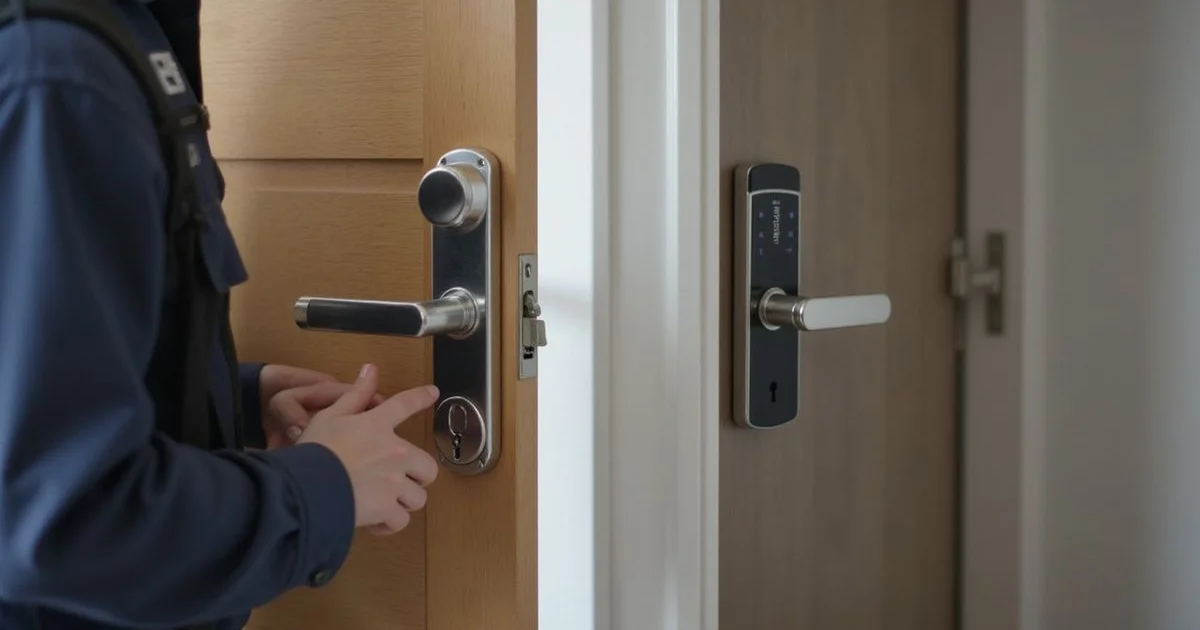
We see it all the time in our line of work.
Homeowners buy a sleek new gadget, only to face a frustrating lockout because the unit does not fit their door frame. The debate between a mortise vs push pull smart lock is about much more than just aesthetics.
It dictates how easily you get inside when your hands are full.
Our smart lock installation covers both formats to ensure you get a perfect fit. The right choice prevents future hardware failures and keeps your property secure.
We will look at specific dimensions, break down the feature differences, and help you decide.
The Two Form Factors
Both mortise and push-pull formats dominate the Malaysian security market in 2026. A clear understanding of these two body styles helps you avoid costly retrofit mistakes.
We highly recommend measuring your door thickness before falling in love with a specific model. Standard wooden doors require different preparations than thick security gates.
Mortise Smart Locks
A mortise smart lock drops into a deep pocket cut into the edge of the door, just like a traditional mechanical lock. The exterior features a handle, usually a lever, and a keypad with a fingerprint reader.
The interior shows a matching handle and a small control panel.
We install these daily, and they remain the industry standard for sheer physical strength. Models like the Yale YDM7116 or the Aqara A100 rely on this proven design.
Strengths:
- Stronger lock body: Mortise bodies use heavy steel and multi-point engagement to resist forced entry.
- Familiar look: The traditional lever feels completely natural for guests or elderly family members.
- Better for solid doors: This design is perfect for thick timber doors and well-built Malaysian security doors.
- Manual deadbolt override: Many units support a physical key or manual deadbolt throw, preventing lockouts if the digital motor fails.
Trade-offs:
- Requires specific cuts: The door must accommodate standard dimensions, like the common 6068 profile (60mm backset and 68mm center distance).
- Slightly slower entry: You still have to physically pull down the handle to open the door.
- Harder to retrofit: Upgrading from a basic cylindrical lock takes precision carpentry work.
Push-Pull Smart Locks
A push-pull smart lock has no traditional handle to turn. You simply authenticate via fingerprint, PIN, or app, and then push the door open.
To leave the house, you turn or pull an inside handle.
We love the speed this offers for busy households. The exterior is a flat, modern panel, while the interior features a button or a short pull bar. Premium options like the Kaadas K9 or Philips EasyKey 9300 utilize FPC semiconductor fingerprint sensors that read in under 0.5 seconds.
Strengths:
- Faster daily use: The push-to-enter motion is incredibly fast when your hands are full of groceries.
- Cleaner modern look: The large, flat exterior panel looks beautiful on contemporary homes.
- Easier to retrofit: These often cover existing holes better than a long lever handle on many standard doors.
- Automatic locking: Most units feature an auto-lock sensor that engages the deadbolt the moment you close the door.
Trade-offs:
- Wider door cutout needed: The large panel footprint is wider than a standard mortise faceplate, requiring more drilling.
- Battery dependency: Without a manual lever, a dead battery can cause a lockout if you do not carry a backup power bank.
- Learning curve: Some guests or older family members prefer the tactile feedback of a physical handle.
Door-Type Fit
Finding the right match requires looking closely at your specific entryway.
Malaysian Security Doors
Many heavy metal security doors take both formats, depending on the specific model and thickness. A mortise lock generally fits cleaner into the existing metal pocket.
We often install push-pull models if the door panel has enough flat surface area to support the wider footprint. You must ensure the metal frame does not block the locking sensor.
Solid Timber Doors
Solid wood landed home front doors are usually the easiest to work with. A mortise smart lock is an excellent match because these doors are often already cut for a standard mechanical mortise.
Upgrading to a smart version requires minimal modifications.
Grille Gates
A push-pull unit is rarely a direct fit for a grille gate because the narrow panel design cannot accept a wide lock body. Grille gates typically require a narrow stile lock, like a 2885 mortise profile.
We have seen homeowners successfully install specialized models like the Avant Guard G11 on grilles, but it requires careful planning. Standard mortise installations on a grille are possible if you consider a few factors:
- Clearance space: Ensure the handle does not hit the main wooden door.
- Custom brackets: You often need a custom mounting plate to secure the lock body.
- Weatherproofing: Grilles are exposed, so the lock must carry an IP-rating for water resistance.
Condo Unit Doors
Both lock formats work exceptionally well for standard condominium fire doors. A push-pull smart lock is currently the popular choice for newer condo residents wanting a high-tech aesthetic.
These units also make it easy to grant temporary access codes to cleaners or visitors.
Security Level
Both form factors provide excellent protection for your home. The internal body strength and the cylinder grade matter much more than the external handle style.
We advise clients to look for Class C lock cylinders, which offer the highest resistance against physical picking. Premium push-pull units from Kaadas or Samsung beat a budget mortise from an unknown brand on security every single time.
For a deeper look at picking the right model for your specific door, see choosing the best digital lock.
Price Difference
The price difference between the two formats is smaller than the price difference between competing brands. In Malaysia, material costs and installation complexity dictate the final bill.
We recommend picking your lock based on door fit first, brand reliability second, and format third. Cheap locks are never worth the risk of a midnight lockout.
| Lock Category | Estimated Cost (Supply & Install) | Popular Brand Examples |
|---|---|---|
| Mid-Tier Mortise | RM900 to RM1,600 | Aqara, Xiaomi |
| Mid-Tier Push-Pull | RM1,000 to RM1,800 | Lenovo, Lockin |
| Premium Mortise | RM1,500 to RM2,500 | Yale (e.g., YDM series) |
| Premium Push-Pull | RM1,500 to RM3,000 | Kaadas (K9), Philips (9300) |
Installation Considerations
A standard mortise unit needs a clean, rectangular pocket cut deep into the door edge, plus precise through-holes for the spindle. If the door is already mortise-cut for a standard 60mm backset, the installation process is fast.
We find that if the door requires new cutting, a careful installer must use a professional router or grinder. Modifying a steel door frame creates sparks and takes significant time.
A push-pull model needs a wider cutout that perfectly matches the large panel footprint. Some older doors that previously held a basic cylindrical lock will need a slightly wider cut to accommodate the push-pull mechanics. You should always hire a professional to ensure the auto-lock alignment is perfectly straight.
How to Decide
The best way to proceed is to assess your current hardware before buying anything online. Take clear photos of your front door, the back panel, and the side edge.
Check your door fit with our technicians by sharing front, back, and edge photos of the door.
Our team will tell you which formats work cleanly and recommend specific models. Most homes can easily take either style.
We quote both options to give you full transparency. The final choice often comes down to your preferred daily aesthetic and budget.