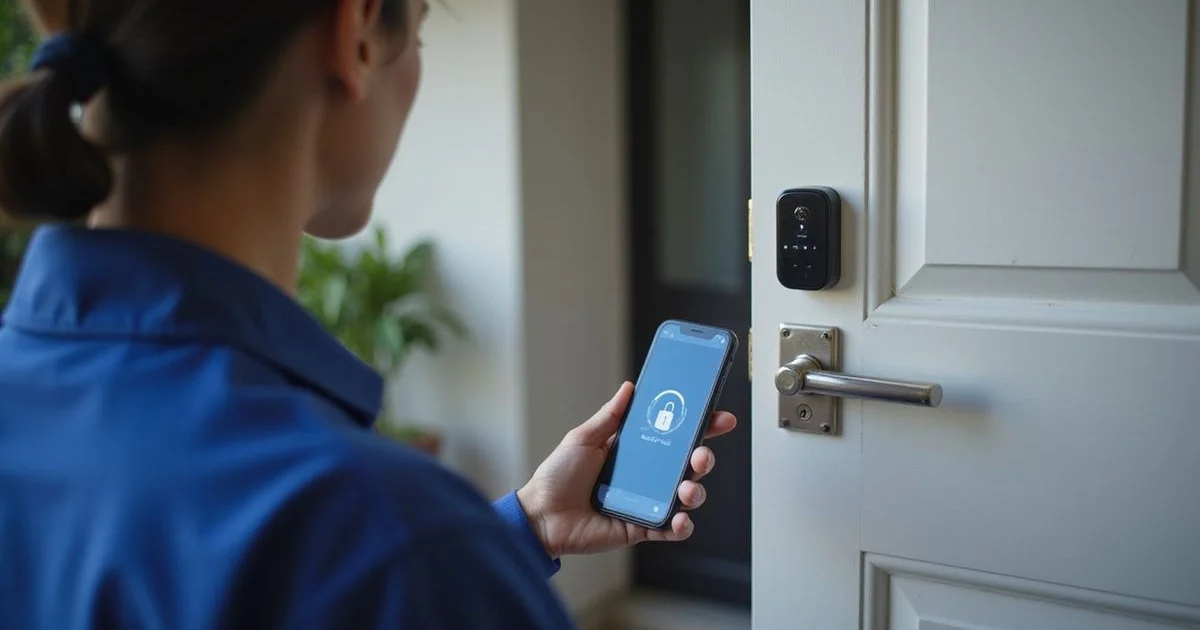
Getting locked out of your property because of a jammed mechanical lock is incredibly frustrating. You have probably considered upgrading to a digital system to solve the lost key problem. But are smart locks safe?
Security must come first when making this choice. Our team often answers questions about vulnerabilities from homeowners who want convenience without compromising safety. The data shows that high-quality digital hardware actually prevents break-ins better than traditional deadbolts.
A premium system offers significant peace of mind.
We only use brands proven to resist both physical and digital tampering for our professional smart lock installation services. Let’s look at the actual data to see what the vulnerabilities really are. Then we can explore exactly how to secure your property.
The Honest Answer: Are Smart Locks Safe?
Yes, smart locks can theoretically be hacked, just like car key fobs or phone security systems. The honest question is how much risk that adds compared to the security of a traditional cylinder.
Our technicians see the difference between premium hardware and cheap knockoffs every day. A well-built model from an established brand is at least as secure as a standard mechanical setup. Often, these premium devices are much stronger against forced entry.
“The true measure of a lock’s security is not its digital interface, but its physical ability to withstand blunt force.”
We find that state-level adoption proves the reliability of digital locking mechanisms. The Royal Malaysia Police (PDRM) actually embraces smart security technology to monitor facilities. They collaborated with MIMOS on an advanced IoT lock-up system, showing high trust in commercial digital security.
Real vs Overstated Risks
Real risks usually stem from poor user habits or cheap hardware, while overstated risks come from Hollywood movies. Let’s separate the facts from the fiction to help you make a smart choice.
Our security specialists always remind clients to change default passwords immediately after installation. Some unbranded locks ship with a factory PIN of “0000” or a master code like “1234”. Anyone with access to the user manual can simply type those numbers in to open the door.
We highly recommend setting a unique administrative code on day one.
Real risks (worth thinking about):
- Weak Bluetooth security: Unbranded devices sold on cheap online marketplaces often use unencrypted Bluetooth connections.
- Replay attacks: A nearby attacker can intercept an unencrypted signal to bypass the door later.
- Poor app security: Basic applications fail to require two-factor authentication (2FA).
Overstated risks (the news likes to scare):
- Remote internet hacking: Opening a door from across the globe only happens if the factory leaves a backdoor open, which reputable manufacturers avoid.
- Radio jamming bypass: Jamming a Wi-Fi signal does not trigger the bolt to open. It simply blocks communication while the physical latch stays secure.
- Credential broadcasting: Wi-Fi devices connect outward to a secure cloud service rather than broadcasting your home network passwords.
Encryption Standards
Reputable systems use AES-128 or AES-256 encryption to protect app, Bluetooth, and Wi-Fi communications. This is the exact same cryptographic standard securing online banking applications like Maybank2u.
Our security experts refuse to install devices lacking this commercial-grade encryption. It is not realistically breakable by anyone short of state-sponsored intelligence agencies. You get incredible digital strength when you pair AES encryption with certificate-based device authentication.
We advise all consumers to follow guidelines from CyberSecurity Malaysia and keep device firmware updated. Rolling codes provide another layer of defense by changing the entry signal every single time you use the keypad. The digital side of a good electronic deadbolt is incredibly strong.
Physical Attacks Still Matter
Burglars almost always rely on brute force physical attacks rather than sophisticated hacking tools. They will snap the cylinder, kick the door frame, smash a nearby window, or jimmy the locking body.
Our field data confirms that a heavy-duty physical build stops intruders much faster than software features. The Department of Statistics Malaysia (DOSM) reported over 47,000 property crime offenses recently. Almost 78% of these house break-ins occurred at night.
We know that brand reputation and material quality matter significantly more than a long list of features. Smart devices with a strong zinc-alloy body and anti-pry alarms resist violent entry just like premium traditional deadbolts. A cheap device might bristle with tech features but fail instantly against a crowbar.
Comparing Hardware Resilience
| Security Threat | Cheap Online Marketplace Lock | Premium Branded Lock |
|---|---|---|
| Cylinder Snapping | Standard alloy, easily broken | Hardened steel, anti-snap design |
| Prying Attacks | Flimsy plastic casing | Solid zinc-alloy body |
| Forced Entry | No physical alert system | 80dB tamper alarm triggers instantly |
Mechanical Fallback Is a Feature, Not a Weakness
A mechanical override key does not create a vulnerability if the cylinder itself is high quality. The mechanical fallback actually protects you from being permanently locked out during a severe hardware failure.
Our team recommends mechanical backups specifically because Malaysian weather can be unpredictable. Extreme humidity and sudden thunderstorms can occasionally cause battery corrosion or electronic glitches in poorly sealed units. Some vehicle owners know the panic of a dead transponder key, and a home lockout feels exactly the same.
We want you to understand how secure these physical backups really are in practice.
- Quality manufacturers pair the mechanical keyway with a high-security cylinder.
- The physical keyhole is small and deliberately hidden from plain sight to raise the difficulty.
- Bypassing the electronics still requires the burglar to stand directly in front of the door.
The security cost is incredibly minor compared to the massive convenience of having a reliable backup entry method.
Brand Recommendations
For the Malaysian market, you must stick to established brands with proven local warranties and IP64 weather ratings. Avoid generic substitutes on e-commerce platforms that offer zero clear branding and no reviewable history.
Our installation crew trusts specific manufacturers that perform well in hot and humid climates. Kaadas, Samsung, Yale, Aifeibao, Igloohome, and Everlock offer the reliability and regional support you need. These are the exact brands we install on our own properties.
We provide deeper guidance on picking the right model for your specific entrance in our dedicated resource. Please read our guide on choosing a reputable lock to see which features matter most for local doors.
Practical Smart Lock Security Setup
Setting up your new device correctly is just as important as buying the right hardware. Following basic digital hygiene prevents the vast majority of unauthorized access attempts.
Our technicians guide every customer through a strict setup protocol to ensure maximum protection. You must treat your door lock exactly like your bank account. A few simple habits keep your property safe.
Essential Setup Steps:
- Change default PIN and admin codes immediately upon installation.
- Use unique strong app passwords and activate two-factor authentication (2FA) when available.
- Keep firmware updated by setting the mobile application to auto-update automatically.
- Never share your master PIN over text messages, but use the dedicated guest PIN feature instead.
- Store the mechanical override key off-site, such as at your workplace or a trusted neighbour’s house.
- Apply a protective weather shield if your door faces direct afternoon sun or blowing rain.
If you install your system thoughtfully, it will serve you reliably for years.
Upgrading to a keyless entry system adds massive convenience without sacrificing your safety. The data clearly shows that proper encryption and solid physical construction keep intruders out.
So, can smart locks be hacked?
Yes, but they are exceptionally safe when installed correctly.
We know that choosing the right equipment can feel overwhelming at first. Just stick to reputable brands and follow the basic configuration steps outlined above.
You can ask our advice on the right brand and setup for your door.
We will never recommend a product we wouldn’t trust on our own homes.